
A well pump is one of the most important parts of your home’s water system. It quietly works every day to provide clean, dependable water for drinking, cooking, bathing, laundry, irrigation, and countless other household needs. Because it’s such an essential piece of equipment, any signs of trouble can leave homeowners wondering whether they should repair the pump or replace it entirely.
The answer isn’t always simple. In many cases, a relatively inexpensive repair can restore your system for years to come. In other situations, replacing the pump is the smarter long-term investment that saves money, improves efficiency, and reduces the risk of future breakdowns.
At W&W Well & Pump Services, we help homeowners make informed decisions based on the condition of their entire well system—not just the pump itself. Understanding the factors involved can help you avoid unnecessary expenses while ensuring your home always has a reliable water supply.
Understanding How a Well Pump Works
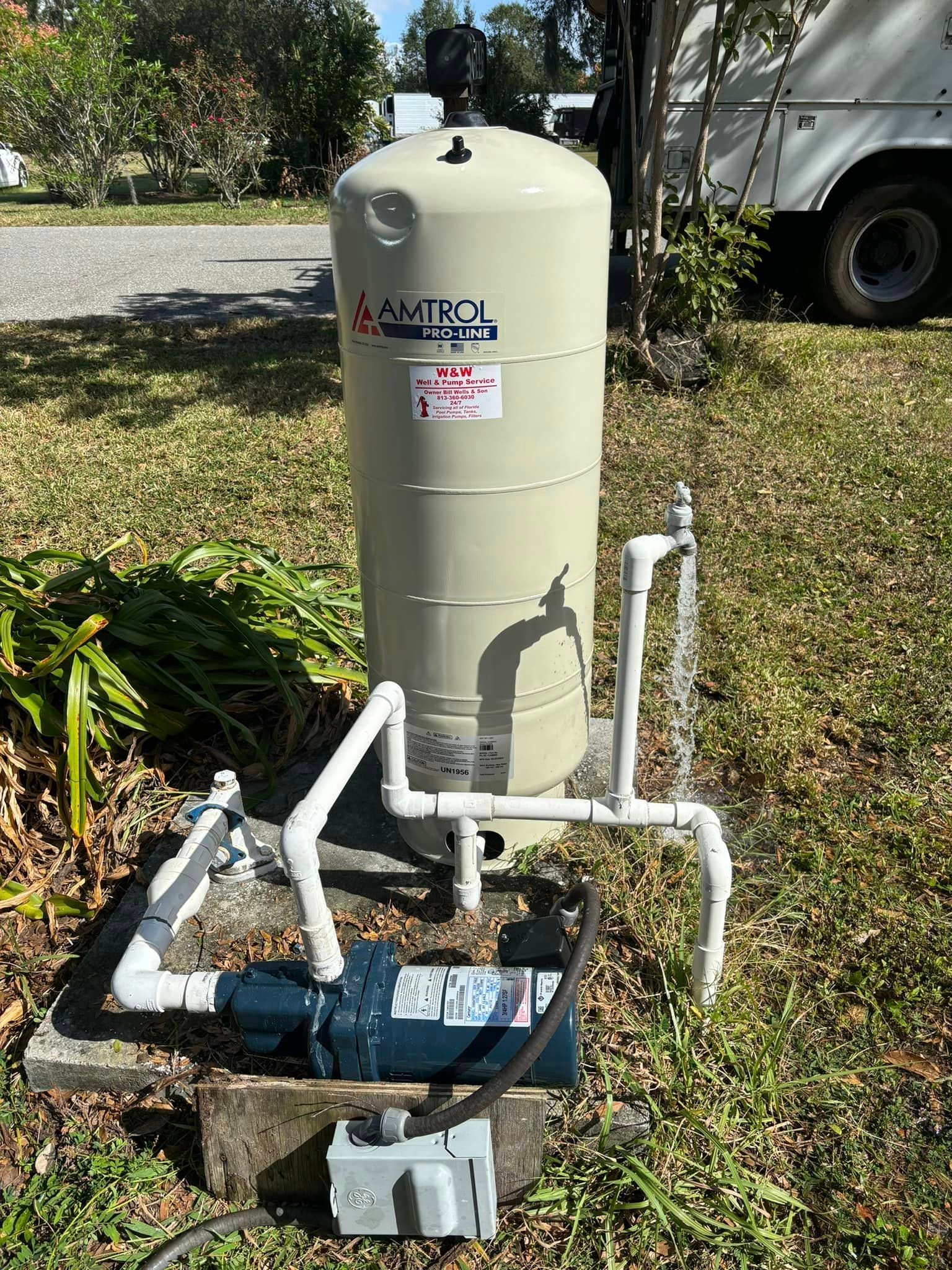
A well pump draws groundwater from your well and delivers it into your home’s plumbing system. It works together with several other components, including the pressure tank, pressure switch, electrical controls, and plumbing connections.
When every part of the system is operating correctly, you’ll enjoy consistent water pressure and reliable performance. However, when one component begins to fail, it can affect the entire system.
Because several different parts work together, it’s important to accurately diagnose the problem before deciding whether a repair or full replacement is necessary.
When a Well Pump Can Usually Be Repaired
Not every pump problem means you need a new pump. In fact, many issues involve supporting components rather than the pump itself.
Repairs are often the best option when the problem involves:
✅ Pressure switch failure
✅ Electrical wiring issues
✅ Faulty control box
✅ Pressure tank adjustments
✅ Minor plumbing leaks
✅ Small mechanical repairs
If the pump itself is still in good condition and the damage is isolated to one component, repairing the system is often the most cost-effective solution.
Signs Your Well Pump May Need Replacement
While repairs can solve many issues, there comes a point when replacing the pump becomes the better investment.
Some of the most common signs include:
✅ Frequent breakdowns
✅ Pump is more than 10–15 years old
✅ Constant loss of water pressure
✅ Pump runs continuously
✅ Increasing electrical costs
✅ Motor failure
✅ Major internal damage
If you’re calling for repairs multiple times each year, replacing the pump may actually cost less over time than continuing to repair aging equipment.
Consider the Age of Your Pump
Age is one of the biggest factors when deciding between repair and replacement.
Most residential well pumps have an average lifespan of approximately 10 to 15 years, depending on:
✅ Installation quality
✅ Daily water usage
✅ Water quality
✅ Maintenance history
✅ Proper system sizing
If your pump is approaching the end of its expected lifespan, investing in a new system may provide greater reliability and better long-term value.
Compare the Cost of Repairs
One repair doesn’t necessarily justify replacing your pump.
However, repeated service calls can quickly become expensive.
If you’ve recently repaired:
✅ Pressure switch
✅ Pressure tank
✅ Electrical controls
✅ Wiring
✅ Pump motor
and another major repair is now needed, replacement may offer better value.
A professional evaluation helps determine whether additional repairs make financial sense.
Energy Efficiency Matters
Older well pumps often consume significantly more electricity than newer equipment.
Modern pumps are designed to operate more efficiently, delivering better performance while using less energy.
Replacing an aging pump may provide benefits such as:
✅ Lower monthly energy costs
✅ More consistent water pressure
✅ Quieter operation
✅ Improved reliability
✅ Reduced maintenance requirements
Over time, these savings can help offset the cost of a new installation.
Don’t Forget the Rest of the Well System
A well pump doesn’t operate alone.
During every inspection, it’s important to evaluate the condition of the entire system, including:
✅ Pressure tank
✅ Pressure switch
✅ Electrical components
✅ Plumbing connections
✅ Water filtration equipment
✅ Overall water quality
Sometimes replacing only the pump won’t solve the underlying issue if another component is causing the problem.
Why Professional Diagnosis Is Important
Many homeowners assume the pump has failed when the actual problem may be something much simpler.
Professional diagnostic equipment allows technicians to accurately identify the cause before replacing expensive equipment unnecessarily.
A complete inspection can determine:
✅ Whether the pump is operating correctly
✅ If electrical components are functioning properly
✅ Whether pressure settings are correct
✅ If water flow is being restricted
✅ Whether repairs can restore normal operation
Making decisions based on accurate testing helps avoid unnecessary expenses.
Benefits of Repairing Your Existing Pump
When appropriate, repairing your current system offers several advantages.
These include:
✅ Lower upfront cost
✅ Faster repairs
✅ Minimal disruption
✅ Extended equipment life
✅ Continued reliable performance
If the pump is relatively new and in otherwise good condition, repairs often provide excellent value.
Benefits of Installing a New Well Pump
There are also situations where replacement provides greater long-term benefits.
A new well pump can offer:
✅ Greater energy efficiency
✅ Improved water pressure
✅ Increased reliability
✅ Modern technology
✅ Lower maintenance costs
✅ Better long-term performance
For older systems or pumps experiencing repeated failures, replacement often provides greater peace of mind.
Preventative Maintenance Helps You Avoid Both
Whether your pump is new or older, routine maintenance remains one of the best investments you can make.
Regular inspections allow technicians to identify small problems before they become expensive repairs or complete system failures.
Preventative maintenance includes checking:
✅ Pump performance
✅ Pressure tank operation
✅ Pressure switch settings
✅ Electrical components
✅ Water quality
✅ Overall system efficiency
These inspections help maximize the lifespan of your entire well system.
Trust W&W Well & Pump Services for Honest Recommendations
At W&W Well & Pump Services, we believe every homeowner deserves honest advice based on the actual condition of their water system. Our experienced technicians carefully inspect every component before recommending repairs or replacement, ensuring you receive the solution that offers the best long-term value.
Whether your pump needs a simple repair, preventative maintenance, or a complete replacement, our goal is to restore reliable water service while helping you make the most informed decision possible. We take pride in delivering dependable workmanship, quality products, and exceptional customer service that homeowners throughout Central Florida can trust.
If you’re unsure whether your well pump should be repaired or replaced, a professional inspection is the best place to start. Understanding the true condition of your system can save money today while helping prevent larger problems tomorrow.
Frequently Asked Questions
How do I know if my well pump should be repaired or replaced?
The decision depends on the pump’s age, condition, repair history, and the severity of the problem. A professional inspection can determine whether a repair is sufficient or if replacement offers better long-term value.
Is it worth repairing an older well pump?
If the pump is nearing the end of its expected lifespan and has required multiple repairs, replacement is often the more cost-effective option. Newer pumps with isolated issues can usually be repaired successfully.
How long does it take to replace a well pump?
The time varies depending on the type of well and the installation, but many residential well pump replacements can be completed within a single day.
Can replacing my well pump improve water pressure?
Yes. If the existing pump is worn or undersized, installing a properly sized new pump can improve water pressure and overall system performance.
How can I extend the life of my well pump?
Routine inspections, preventative maintenance, prompt repairs, and addressing changes in water pressure early are the best ways to maximize the lifespan of your well pump and avoid unexpected failures.