Low water pressure is one of the most common complaints among homeowners with private well systems. It may start gradually with weaker showers or slow-filling sinks, or it can appear suddenly and affect every faucet in your home.
While low water pressure can be frustrating, it’s also an early warning sign that something within your well system may need attention. The issue could be as simple as a clogged filter or as complex as a failing well pump. Identifying the cause early can help prevent further damage and restore your water system before a complete failure occurs.
At W&W Well & Pump Services, we help homeowners diagnose water pressure problems and provide reliable solutions to keep well systems operating efficiently.
What Is Considered Low Water Pressure?
Water pressure refers to the force that pushes water through your plumbing system. When pressure drops below normal, everyday tasks become more difficult.
You may notice:
✅ Weak showers
✅ Faucets taking longer to fill containers
✅ Washing machines filling slowly
✅ Outdoor hoses losing pressure
✅ Multiple fixtures struggling when used at the same time
If the problem affects your entire home, the issue is often somewhere within the well system rather than an individual plumbing fixture.
A Failing Well Pump
One of the most common causes of low water pressure is a well pump that is no longer operating efficiently.
As pumps age, internal components wear down and gradually lose their ability to maintain consistent pressure throughout the system.
Signs your pump may be struggling include:
✅ Pressure continues to decrease over time
✅ The pump runs longer than normal
✅ Water pressure varies throughout the day
✅ The system cycles more frequently
A professional inspection can determine whether the pump needs repair or replacement.
Pressure Tank Problems
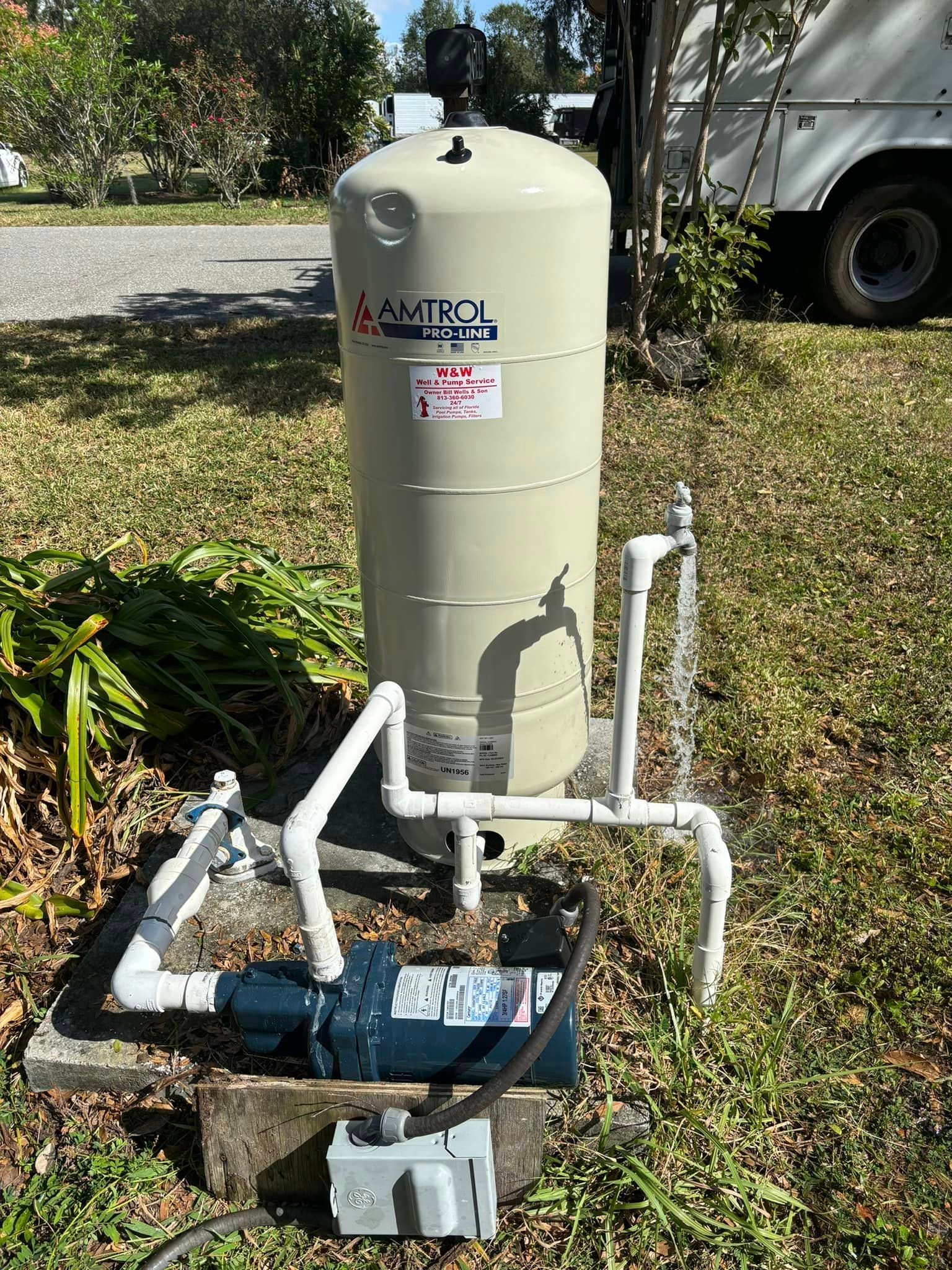
Your pressure tank helps maintain steady water pressure by storing water under pressure until it’s needed.
When the tank develops problems, you may experience:
✅ Fluctuating pressure
✅ Pump turning on and off frequently
✅ Weak water flow
✅ Pressure dropping during heavy water use
Many pressure tank issues can be identified during a routine inspection before they lead to larger system failures.
Pressure Switch Issues
The pressure switch controls when your well pump starts and stops.
If it becomes worn or incorrectly adjusted, it may not maintain the proper pressure settings for your home.
Common symptoms include:
✅ Inconsistent water pressure
✅ Pump cycling too often
✅ Water pressure dropping unexpectedly
Because the pressure switch works with your pump and pressure tank, diagnosing the entire system is important.
Clogged Water Filters
Many homes with private wells use filtration systems to improve water quality.
Over time, filters naturally collect sediment, minerals, and other particles.
When filters become clogged, water flow can decrease significantly.
Signs include:
✅ Reduced pressure throughout the house
✅ Water flow improving after filter replacement
✅ Dirty or discolored filter cartridges
Replacing filters according to the manufacturer’s recommendations helps maintain both water quality and system performance.
Plumbing Leaks
A hidden plumbing leak can reduce the amount of pressure reaching your fixtures.
Leaks may occur:
✅ Underground
✅ Inside walls
✅ Around outdoor water lines
✅ Near the pressure tank
Besides lowering pressure, leaks can also increase your electric bill by causing the pump to run more often than necessary.
Sediment Buildup
Over time, naturally occurring minerals and sediment can accumulate inside pipes, fixtures, and plumbing components.
This buildup gradually restricts water flow and reduces pressure throughout the home.
Sediment may also affect:
✅ Shower heads
✅ Faucet aerators
✅ Water treatment equipment
✅ Valves and plumbing connections
Routine maintenance helps minimize these restrictions and keeps your system operating efficiently.
Increased Household Water Demand
Sometimes the well system is functioning properly, but demand exceeds what the system can comfortably supply.
For example, using several water-intensive appliances at the same time may temporarily reduce water pressure.
This can happen when:
✅ Multiple showers are running
✅ Irrigation systems are operating
✅ Washing machines and dishwashers are filling
✅ Outdoor hoses are in use
If low pressure only occurs during periods of heavy water use, your system may benefit from a professional evaluation to determine whether upgrades or adjustments are appropriate.
What Can Homeowners Safely Check?
Before assuming a major repair is needed, there are a few simple things homeowners can inspect.
You can safely:
✅ Replace dirty water filters
✅ Check for obvious plumbing leaks
✅ Inspect faucet aerators for buildup
✅ Observe whether the pressure problem affects the whole house or only one fixture
✅ Listen for the pump running unusually long
These basic observations can help provide useful information when a technician evaluates your system.
When Is It Time to Call a Professional?
If replacing filters and checking for obvious leaks doesn’t solve the problem, it’s time for a complete system inspection.
Professional diagnosis allows technicians to evaluate:
✅ Pump performance
✅ Pressure tank operation
✅ Pressure switch settings
✅ Electrical components
✅ Water system efficiency
✅ Overall well performance
Identifying the true cause early often prevents more expensive repairs later.
Can Regular Maintenance Help Prevent Low Water Pressure?
Yes. Many water pressure problems develop gradually and can be identified before they become serious.
Routine inspections help detect:
✅ Worn pump components
✅ Pressure tank issues
✅ Electrical concerns
✅ Sediment buildup
✅ Declining system performance
Keeping your system properly maintained helps ensure reliable water pressure while extending the lifespan of your well equipment.
Dependable Well System Solutions from W&W Well & Pump Services
Low water pressure doesn’t always mean you need a new well pump, but it does mean your system deserves attention. Identifying the cause early helps prevent additional wear on your equipment and reduces the risk of unexpected water outages.
At W&W Well & Pump Services, we provide professional inspections, well pump repairs, pressure tank service, well system diagnostics, and water filtration solutions for homeowners throughout Central Florida. Our goal is to identify the problem accurately, recommend practical solutions, and restore dependable water pressure as efficiently as possible.
If your well water pressure isn’t what it used to be, a professional evaluation can help ensure your system continues delivering reliable water for years to come.
Frequently Asked Questions
Why is my well water pressure suddenly low?
Low water pressure can result from a failing well pump, pressure tank problems, clogged filters, plumbing leaks, pressure switch issues, or sediment buildup. A professional inspection can determine the exact cause.
Can a dirty water filter reduce water pressure?
Yes. As filters collect sediment and minerals, they can restrict water flow throughout the home. Replacing clogged filters often restores normal pressure if they are the source of the problem.
Does low water pressure mean I need a new well pump?
Not necessarily. Many pressure problems are caused by pressure tanks, switches, filters, or plumbing issues rather than the pump itself. Proper diagnosis is the best way to determine the appropriate repair.
How often should my well system be inspected?
Annual inspections are generally recommended to identify developing issues before they affect water pressure or lead to unexpected system failures.
Can regular maintenance improve water pressure?
Yes. Routine maintenance helps keep pumps, pressure tanks, filters, and other system components operating efficiently, reducing the likelihood of pressure problems and extending the life of your well system.